-
Roasters I get coffee from & the coffees I loved – 2024-25
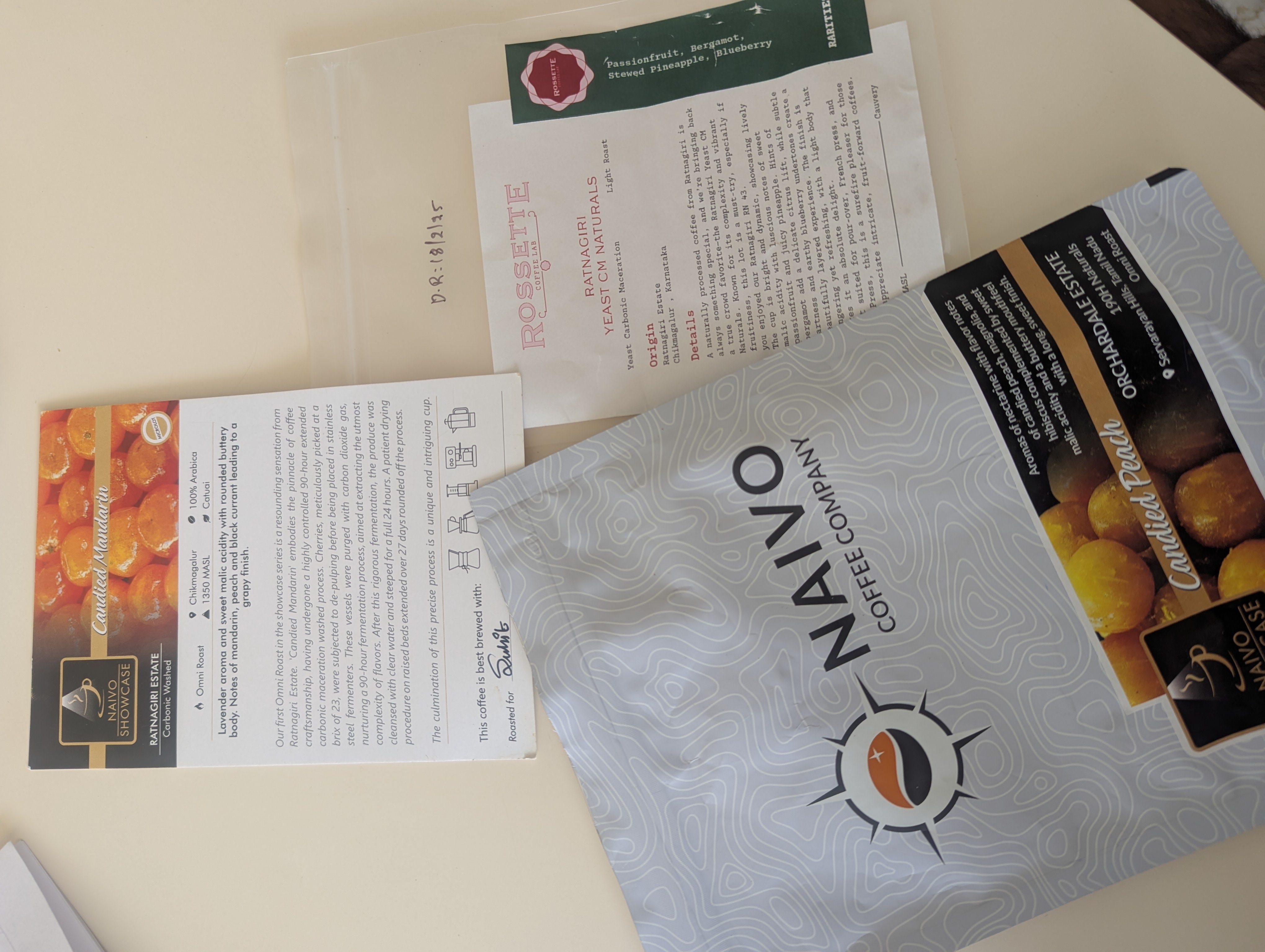
For a long time, I was largely brewing my favourite type of coffee- a medium roasted washed coffee. Now, this doesn’t help me realise the wider spectrum of taste and flavours out there.
How travelling around the world gives a broader perspective, I started to explore the world of coffee – lighter roasts, new processing and new origins.
I decided on a journey to explore a roaster at a time. This helps in trying out different options from each roaster and reduces the number of shipments (happy earth). Rest of the article is about my experience across the roasters I tried and what I liked from each one of them.
Navio Coffee
Based out of Bangalore, these guys keep churning out many new coffees every year. Two of their coffees stood out in my memories, each having a distinct fruitiness.
- Candied Mandarin – Ratnagiri Carbonic Washed (2024). I wish to get this back. ♥️
- Candied Peach – Orchardale 190H Naturals (2025) 😇
A couple of other coffees that I liked from them were Naivo Balanoor Vontekad; Naivo Balanoor Chandragiri Washed, Attikan White Mist. They also roast coffee sourced from out of India. I haven’t tried them yet.
About a couple of years ago, a friend of mine was looking for Indian coffee varieties to try out for espresso and asked me for some recommendations. Most coffee roasters I could find online were mostly selling espresso blends. Apart from Navio, who stood out with a range of coffee with espresso roast profile.
🔗 Where to find them https://naivo.in/
Rossette Coffee Lab
Delhi based roasters have been experimenting with a bunch of coffee since their formation days. I found a lot of interesting coffee on their website now. Coffees I tired from them in 2025
- Ratnagiri Yeast CM Naturals ( SCA 87+) / Light Roast / Yeast Carbonic Maceration. This coffee blew my mind. Loved every sip of this coffee. ♥️
- Ratnagiri Inoculated Washed (SA 87) / Light-medium Roast / 82H Nitrogen Yeast – It’s really sweet and interesting, I could sense the Lychee flavour. It’s just that it’s not for everyone, it’s not for me for all my mood either.
🔗 Where to find them https://rossettecoffee.com/
The Caffeine Baar
The Caffeine Baar brings coffee experience from farm to cup. All coffees are grown and processed at Baarbara Estate.
Coffees that I ordered from them in 2024, drank in their cafe in 2024-25 and loved.
- Baarbara Estate Frozen Cherry 😇
- Baarbara Estate Intenso Yeast Fermentation 😇
I definitely want to call out how thoughtful their bar experience is at their cafe, where they have a set up where a barista can make a coffee right in front of a customer and they can have a conversation about it.
🔗 Where to find them https://www.thecaffeinebaar.com/
Grey Soul Coffee Roasters
I noticed Grey Soul Coffee Roasters from fellow coffee enthusiasts over instagram. They are a Pune based roaster, who produce awesome coffee that comes in a beautiful / minimal packaging. The passion to document the story of the coffee and educate customers about it on the coffee bags are commendable.
These are the 3 coffee I tried from them in 2025.
- #1 Fruit Forward Series – Intenso Yeast Inoculated Naturals (Light-Med) – Loved it! Absolutely stunning. Enjoyed every cup till it lasted. ♥️
- #5 High Scoring Series – Cataui Nano Lot (Light-Med Roast) – This was very balanced and enjoyable coffee. I tried this on a mokapot, aeropress and pour over. Everything tasted quite good. 😇
- #4 North Easter India Series – Nagaland Zunheboto Naturals (Light Profile) – I didn’t enjoy this much.
🔗 Where to find them https://greysoul.coffee/
Marc’s Coffee
I have purchased a set of coffee from Marc’s Coffee recently.
- Balamadi wild [Naturals, Medium Roast] – Brought this coffee in my work trip to Jakarta, and brewing this in the hotel in an Aeropress, with a 1:13.5 ratio. The resultant coffee is bliss – a balanced taste. I am loving this coffee so far. ♥️
- Mahaseer’s Hope – SL 9 Kerehaklu Estate [Washed, Light Roast] – I had previewed it in a small sample of 18 hour cold drip. Further I brewed it at home, love the refreshing acidity. Need to get this again♥️
🔗 Where to find them https://marcscoffees.com/
Black Baza Coffee
Black baza is one of my favourite coffee roasters. It’s not just because of the quality, but also all the social causes that it stands for, environmental and social. They have recently won the SCA’s sustainability award as a recognition. The work that they do, stands out even without any such award. They work very closely with the coffee growers at a grassroot level. They bring out the stories about coffee, nature and more to their customers in a very community like way. I am a regular subscriber to their coffee, and I recently subscribed to their microlots.
There are a few notable microlots that I loved
- Potter’s wasp [Pulp Sun Dried, Light Roast] ♥️
- Red Honey [Anaerobic fermentation, Medium Roast] 😇
🔗 Where to find them https://www.blackbazacoffee.com/
Araku Coffee
One of the Roasters I really love and respect. They work closely with small farmers to support them with global best practices and support them with a more than fair price. They have been at it for decades now. On the other hand, they have been consistently delivering great roasts to brew, savour and love.
Araku coffee comes from Araku valley in Andhra Pradesh. My love for Araku coffee is a bit older. I have done a couple of 101 training courses for coffee tasting and coffee roasting. Along with that I came across their coffee, and I love all their coffees. However, there was one coffee I tried in 2024 for the first time.
- Grand Reserve [Washed + Naturals, Medium Roast] – This provides a lovely, complex cup of coffee. ♥️
These are the coffee I have trying out earlier:
- Microclimate [Naturals, Medium Roast] – A lovely fruity coffee, that I keep going back to once in a while 😇
- Signature [Washed & Naturals, Medium Roast] – I have used this to make turkish coffee in Cezve as well. 😇
- Selection [Blend of washed, honey & natural processes, Medium-dark Roast – I have used this to make turkish coffee in Cezve as well. 😇
🔗 Where to find them https://www.arakucoffee.in/
I am still identifying the next set of Indian coffee roasters to try. Suggestions are welcome.
For Memories If you liked what I write you might want to follow my journey on Instagram @journal_of_a_coffee_enthusiast.
-
Coffee Tasting 101: Why you may not taste the flavour notes as on your coffee bag?
My takes & learnings from my ongoing journey in coffee tasting.
In my initial years of buying and brewing specialty coffee, I used to look at the bag’s flavour notes while sipping on the coffee and think “Where is the almond, the date, the sweet lime? All I can taste is coffee.” I kept wondering why I was unable to taste these notes. After many years I now understand the major reasons.
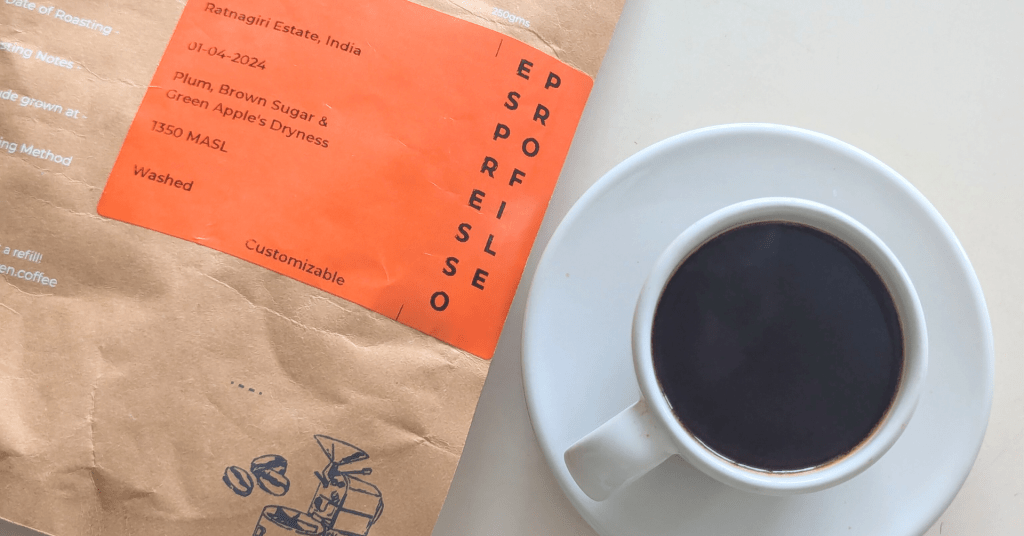
An espresso roast I loved, with Favour notes: Plum, Brown Sugar & Green Apple’s Dryness … because coffee is more like coffee than anything else.
The main reason is because the coffee tastes more like coffee and not the other flavour notes like nuts, fruits, etc. The quantity of a certain set of flavour molecules that represent these nuts or fruits are in much lower concentration in coffee than in the nut or the fruit itself. Coffee can evoke a flavour due to the presence of similar molecules present, but in a very subtle way. It’s amazing how we humans can detect it. But this needs mindfulness and effort.
… because the same bag of coffee can create different brews
Though using the same bag of roasted coffee; two people can have different brew outputs. That’s primarily due to variation in brewing.
- Parameters that vary. This can be due to different grind size, brewing equipment & technique, timings, different water composition and water temperature. All these parameters influence extraction and hence the flavours of coffee.
- Under vs. Over extraction. Finer grind size, Higher water temperature, Higher brew time leads to more extraction. Over-extraction will lead to a more bitter taste; under-extraction leads to a weird sour taste (which is confused as a bitter taste often). Coffee is all about balancing the extraction.
- Variations in Equipment, Accessories, Recipes. Further, many parameters need to be balanced based on equipment being used – e.g Immersion based French Press, vs. Percolation based Pour Overs Aeropress vs. Pressure based Espresso and everything in the middle. Brewing equipment have many variations (e.g. Pour Over maybe has 100+ models). Some key accessories make a significant difference. E.g. Filters can be metal, cloth or paper, these lead to change in oil content and hence mouthfeel and flavours. Further the recipes on each brew equipment can be different e.g. Aeropress probably has zillions of recipes,
- Water is not the same. Water composition (types of salts or lack of them) influences the extraction of different flavour types and hence the final outcome. It’s important to have soft water, but not completely devoid of minerals. There are minerals like Calcium and Magnesium that help in better extraction and are desirable, whereas chlorides are not desirable. Then there are desirable alkalinity, pH, Sodium level and Hardness.. [reference: a detailed article by astrophysics researcher and coffee nerd Jonathan Gagné here]
- Multiply! All the variations can influence the taste of a cup of coffee. Let’s see how many variations are possible. Try multiplying [number of brew equipment] X [number of equipment variation] ̣ X [number of filter/accessory type] X [number of recipes] X [water composition variables]. Mathematically no two brews will ever be the same.
- Balance and Preference. My learning has been that among all these differences, we need to find out what is in general good (e.g. balance in extraction) and what we prefer (what type of brewer or what type of filter).
… because even same brew can lead to different flavor perceptions
What is fascinating is that even after having the same brew output, two people can perceive different flavours. “Flavor” is a complex combination of senses and processes, including touch, smell, taste, and vision. It’s a multisensory experience.
- temperature of the coffee. Based on when you drink the coffee after brewing coffee can taste different, this is because some flavour molecules are more volatile and are lost early after serving. The taste keeps varying as the coffee cools down.
- type of sips or slurps or gulps. The way we drink coffee can influence the way we sense it through our mouth and nose – whether we slurp loud to spray the coffee over our whole mouth, whether we swirl the coffee inside our mouth around our tongue, do we exhale via our nose right after. These various ways of drinking can change how we are exposing the coffee to our sensory receptors.
- our own sensory references. Based on our food habits and culture; we can recall flavor notes in coffee if anything feels similar. For example, if I never had a cranberry or blueberry, I wouldn’t be able to taste them in the coffee. I might think about another fruit that is probably close to it.
- color, shape, texture and weight of the cup. There are fascinating studies done by neuroscientist Fabiana Carvalho on how various other factors impact our sensory perception. She has conducted various studies to identify how – a pink cup can make coffee seem sweeter, a tulip shaped cup can lead to a perception of enhanced aroma, Here are some articles that talk more details in these topics. Read here and here.
I think the best way to enjoy coffee is to not get stressed about the flavour notes. Coffee could taste different to different people. We can use the flavour notes, as directional indicators towards the flavour profile. We can choose to buy coffee, if we think we would like those notes in the coffee.
However, if you really want to sense the flavour notes, then here’s an article to help you.
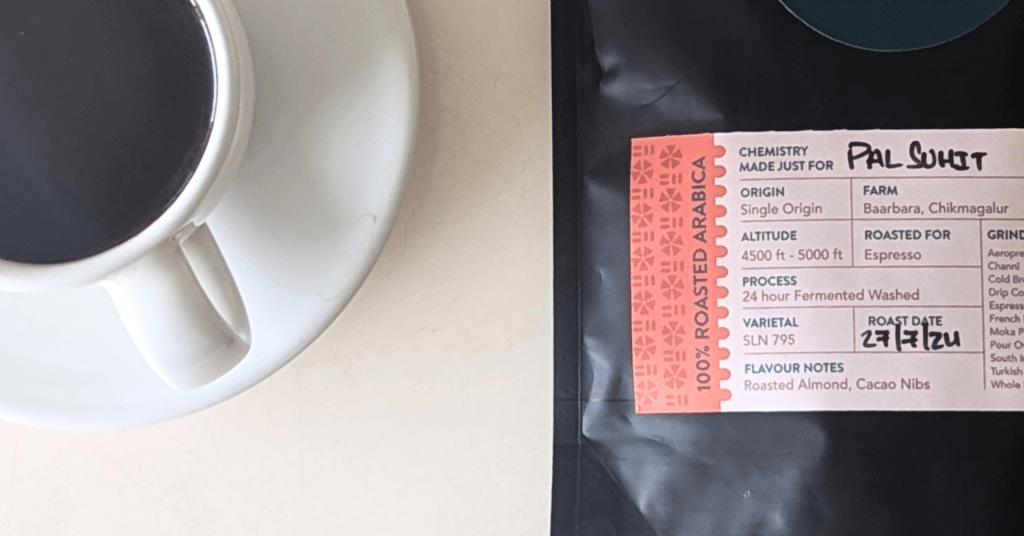
Another espresso roast with Flavour notes: Roasted Almonds, Cacao Nibs
Here are some of the resources I learned from:
- Jessica Easto‘s Book How to Taste Coffee. A well-researched and carefully written book that doesn’t leave anyone behind in this journey. I enjoyed the books depths without feeling lost in advanced jargons.
- Fabiana Carvalho’s Instagram blog @thecoffeesensorium
If you liked what I write you might want to follow my journey on Instagram @journal_of_a_coffee_enthusiast.
-
Coffee tasting 102: Chuck the flavor notes, to find your own
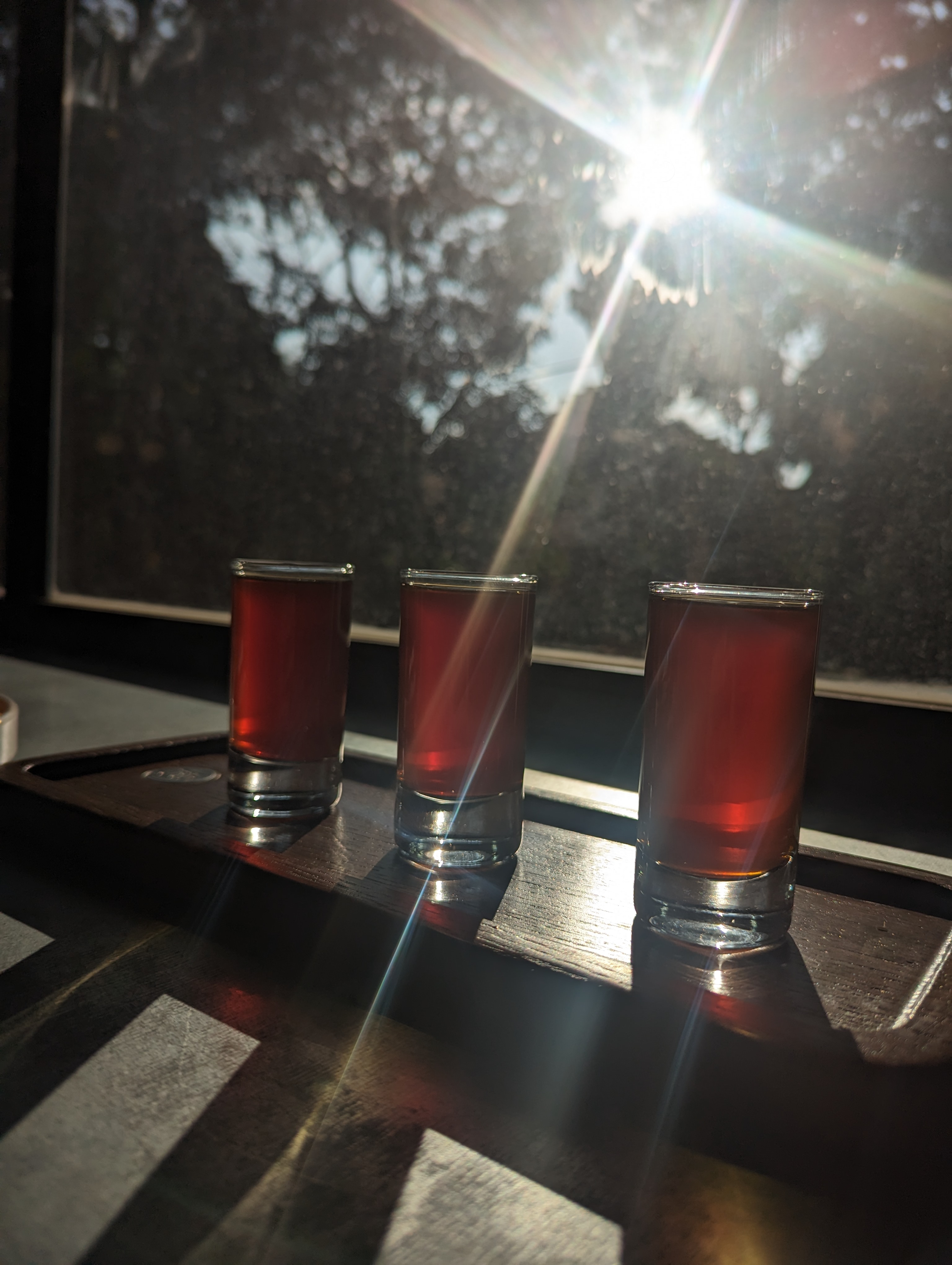
My takes & learnings from my ongoing journey in coffee tasting.
It always sounded intimidating to me, when I heard coffee roasters (their bags), experts and influencers mention about the specific fruit or nut they could taste in the coffee. For a long time I was very under-confident about my coffee tasting skills. All I could do was determine if I like it or not and if it blew my mind.
All I can taste, is coffee. Once in a coffee tasting workshop, my fellow participant mentioned the brand of biscuit he could taste in one of the coffee samples, whereas I was blanking out to state anything. Our guide was encouraging me to write whatever flavor notes would come to mind. But nothing came to me. This happened for all 4 samples of coffee. I could tell the coffees were different, but nothing beyond that.
How to taste better? After a few more years of brewing, drinking and learning about coffee, I realised that in order to be able to pinpoint the flavours, we need some deliberate effort in areas of mindfulness, knowledge, exploration and practice. I will expand a bit on the points and my understanding about them.
- Be mindful while tasting anything. When we are eating or drinking anything, it’s important to pay attention to the flavours, instead of rushing through our food or simultaneously processing them with tv, social media or work. This helps us to be more mindful in general of our sensory perception and strengthens our flavour repository (or reference) that can be recalled while tasting coffee. A Q-grader ( certified professional coffee taster) once told me, “We Q-graders don’t eat, we taste”.
- Be mindful while drinking coffee. Coffee usually has a much milder/subtler intensity of the flavors that one needs to be able to detect and recall from the taste repository. Hence being mindful is super important.
- Taste coffees side by side and compare. We can learn much by comparing and trying to notice the differences. These differences can be identified in the lines of certain parameters. Industry scores coffee out of 10 parameters. As an amateur we can just follow 3-5 parameters – sweetness, acidity, aftertaste, aroma, flavours. Think about each while trying to notice the difference. Is a coffee sweeter than the other, is the smell / flavor fruitier than the other (or is it more like fruit or more like nuts), is aroma or aftertaste more intense than the other and so on. Professionals conduct cupping sessions (for such tasting), where this process is standardized along with a standardized evaluation sheet. It is fun to try it at home with 2-3 coffees and make notes of observations without any pressure.
- Know the tasting framework and language. This helps in knowing and leveraging the framework to taste, e.g. mouthfeel or after-taste. In a coffee workshop, I was asked to note my observations into many parameters including things like aftertaste. That’s when I started noticing some coffees had a definite lingering taste after the sip, while others didn’t. Learning the coffee language (key words) helps establish the coffee tasting mind-map for ourselves and helps communicate with others. In the coffee industry, “aroma” is used to describe the smell of brewed coffee whereas “fragrance” is used for dry coffee. Knowing these helps communicate with others better. There is also the structure and standard flavor notes from the Coffee Taster’s Flavor Wheel and Sensory Lexicon, that Q-Graders and Coffee professionals refer to.
- Learn from the community and the experts. Reading books, watching videos, attending workshops and connecting with fellow enthusiasts help. I have read books, watched videos on ‘coffee tasting / cupping’, attended free and paid workshops, and chatted with fellow enthusiasts. I will share the references at the end.
- Drink a lot of different types of coffee. For a few years in the middle, I was always buying medium roast profile, washed-coffee, from 2-3 regions of India and from a select few roasters. This led to a narrow exposure of coffee experience. Since the last couple of years, I am gradually expanding to coffees of different origins, processes, roasters, roast profiles. My experience with international coffee, light roast, and different processes have given me much diverse experience.
It is optional. If we are really passionate to find out, we can do some deliberate practice, and start identifying the basic flavours like – fruity, nutty, floral etc. Then later on the exact fruit, nut, flower and more. All this effort is optional, and we can enjoy the coffee without doing any of it as well.
As of now, I am often able to assess if something is fruity or not, whether something has an aftertaste or not. I still can’t exactly tell which fruit or nuts or spices. At rare instances, I would jump with excitement when a coffee tasted like caramel, bael fruit (wood apple), etc. It felt so random as Bael fruit was neither my favorite nor had I eaten it in the last 10 years or so, but I could swear by the taste. Despite the randomness, such moments where we identify something so specifically is uplifting, encouraging and satisfying. It’s like suddenly remembering the song name you were trying to recollect from the tune or the name of the person you knew from long back.
Chuck the flavor notes, love the coffee. What I realised is that, we may not be able to recognize the flavor notes on the coffee bags in our cup or something close to them. It’s best to forget about it, and enjoy the cup of coffee at hand.
In the end, what matters is, if we liked the coffee or not and if it blew we mind.…. and we (and only we) can tell that.
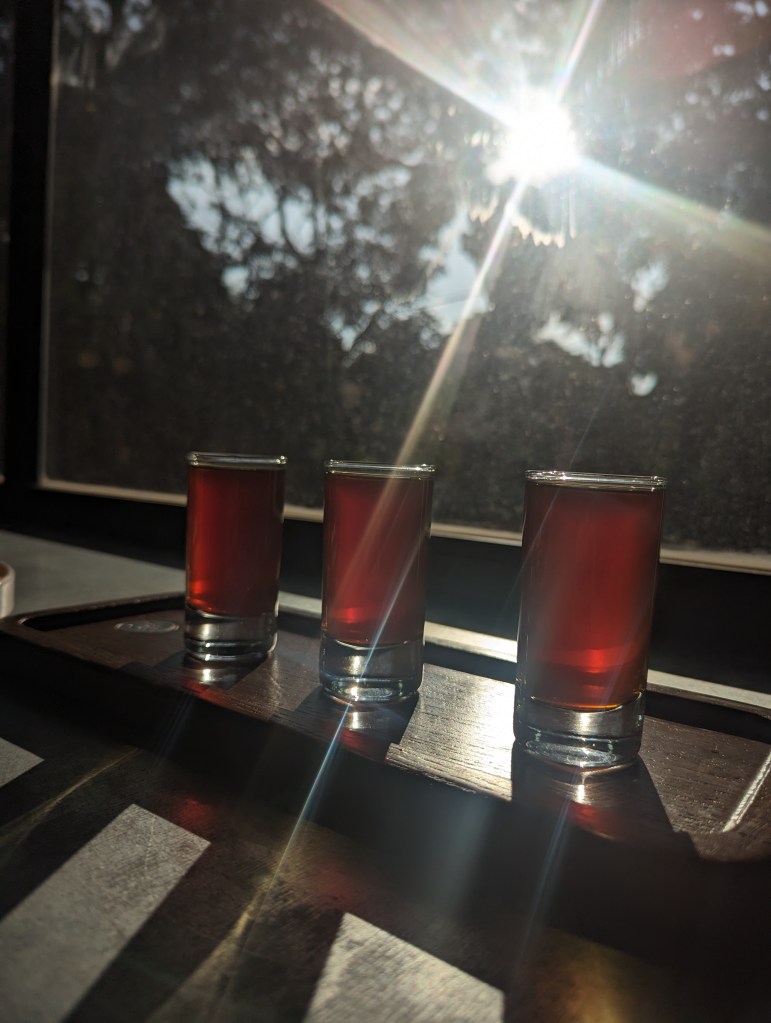
One Bangalore afternoon: Tasting coffee samples at cafe HumbleBean Coffee & Pâtisserie
Here are some of the resources I learned from:
- Jessica Easto‘s Book How to Taste Coffee. A well-researched and carefully written book that doesn’t leave anyone behind in this journey. I enjoyed the books depths without feeling lost in advanced jargons.
- James Hoffman‘s vlogs (1) A beginner’s guide to coffee tasting (2) How to cup (taste) coffee at home
- Aramse‘s vlog A Beginner’s Guide To Coffee Tasting | Palate Training 101
- Reference artefacts Sensory Lexicon & Coffee Taster’s Flavor Wheel by World Coffee Research & Speciality Coffee Association.
- Workshops – There are many workshops running across Indian by various roasters and coffee academies.
If you liked what I write you might want to follow my journey on Instagram @journal_of_a_coffee_enthusiast.
-
Measure: The Weighing & Ratio
When making coffee in my first brewer – moka pot, I never used to measure much. I used to fill the basket with as much pre-ground coffee as I could pack, and put it to brew.
Later while making it in french press, I wasn’t really sure how much coffee to put and how much water to fill. So, I looked up online and followed the recipes asking to add 15 grams and pour 250 g of water, and steep it for 4 minutes. I didn’t have a weighing scale, however I did have measuring spoons and cups in the kitchen. So happily, I measured 250 ml of water roughly using a measuring cup (1 cup = 240 ml + a bit more) and boiled it. While for coffee, I leveraged an approximation with tablespoons based on google’s top search result (2 tablespoons = 14 grams + a bit more). My folks were amused to see my dedication to level the tablespoon full of pre-ground coffee with care. However, things go complex when moving over to more brewing techniques like pour over. In such cases, weighing scales really come handy.
I looked up and found all the coffee scales with capability to measure up to decimal places of grams. However, since it was out of my budget, I went for a food scale with lesser accuracy (up to a gram), a fraction of cost. In the market, there are various options of gearing up.
Levels of gearing up
- Level 0: Eyeball
- Example – Add coffee till our moka pot basket is full.
- Level 1: Volumetric measurements
- Example – Add 2 leveled tablespoon coffee, 2 cups of water.
- Volumetric measurements are not too accurate, as based on grind size different weights of coffee can get packed in a tablespoon.
- Tablespoons are helpful when you are buying pre-ground coffee beans and you don’t have a scale. Definitely get some weighing scale before buying a grinder.
- Level 2: Food Weighing Scale
- Example – Add 14 grams of coffee.
- These are often used for baking, and hence can weigh up to 5 kgs. But on the flip side, the accuracy is at 1 gram level. A 14 grams measure could actually be 13.6 or 14.4 grams.
- Level 3: Coffee Weighing Scale
- Example – Add 14.0 grams of coffee.
- Apart from higher accuracy, these scales also have timers on them. No need to use a stopwatch or mobile phone separately.
- Hacky alternative – You can do with one of the jewelry scales on amazon, as all you need is accuracy up to 0.1 grams. It may not look that cool though.
- Level 4: Smart coffee scales
- Example – Pour water at the rate of 4g/sec for the next 30 sec.
- These scales often come with connected apps that make graphs to satisfy extra data needs and measurement needs.
What is my take?
Without the basic measurements I have made terrible coffee. It’s important to have some weight scale. Currently I am using a basic food scale. I am not planning to upgrade further, as I am yet to detect and appreciate coffee brewing differences at the accuracy of 0.1g. The day I am able to, I will buy the coffee scale.
________
This is a part of the overall article – Unofficial Roadmap for a Coffee Enthusiast
I write articles about my beginner to inetermiedate level specialty coffee journey. If you liked what I write you might want to read more from my coffee blog and follow my journey on Instagram @journal_of_a_coffee_enthusiast.
- Level 0: Eyeball
-
Turkish Coffee: How do I brew specialty coffee with Cezve?
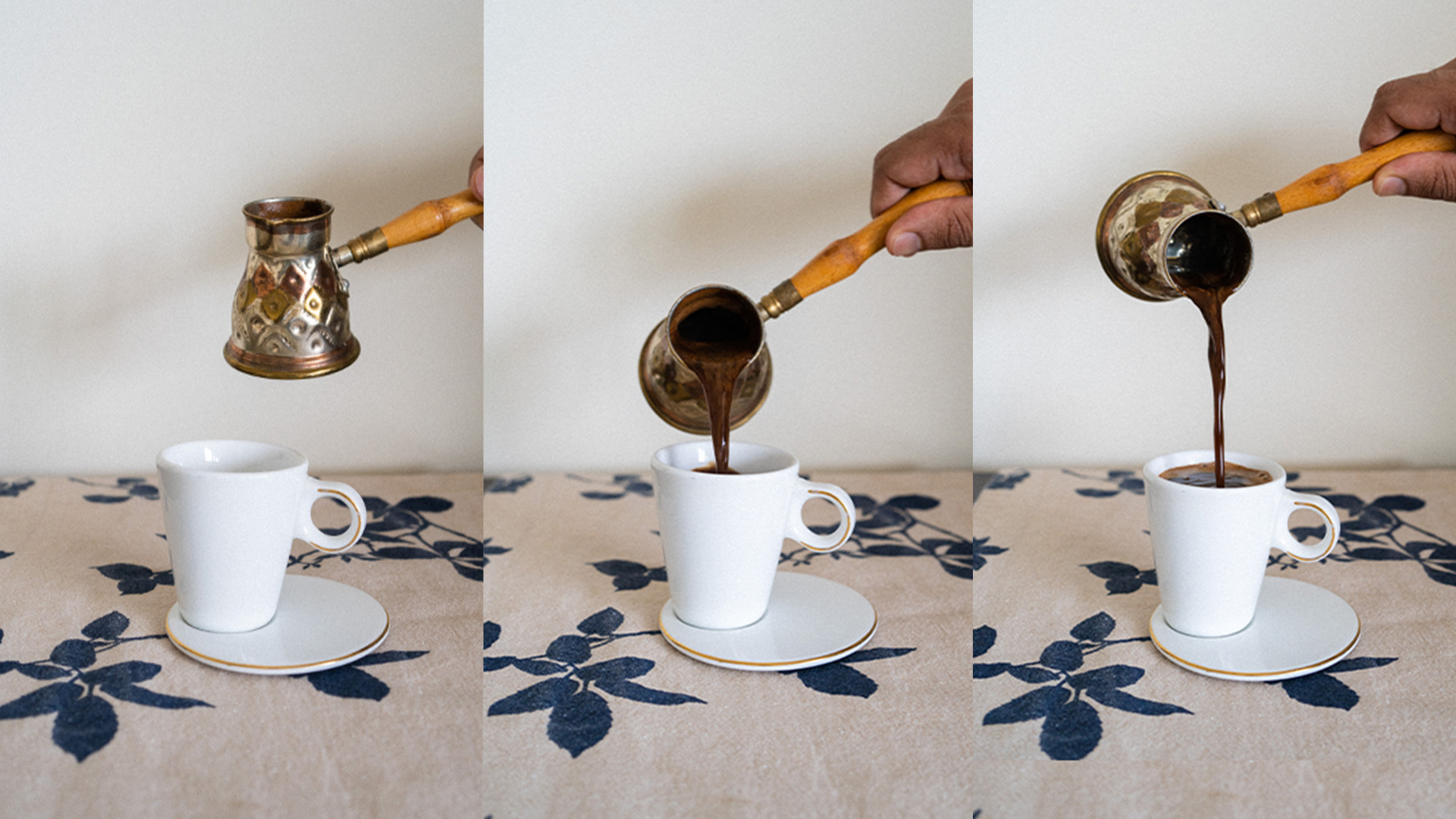
I was strolling through Khan el-Khalili Bazaar in the Egyptian capital city of Cairo; packed with hawkers, shopkeepers, tourists and locals. Among souvenirs of unimaginable variety, my eyes fell on this Cezve. The unique design – a brass tumbler with decorative embossing and an attached rounded wooden handle. I fell in love with it. Even though I had many other coffee brewers at home, I got instant alignment from fellow coffee lover my wife. That’s how I became the proud owner of the unbranded handmade cezve. I was imagining myself pouring Turkish coffee with flair.
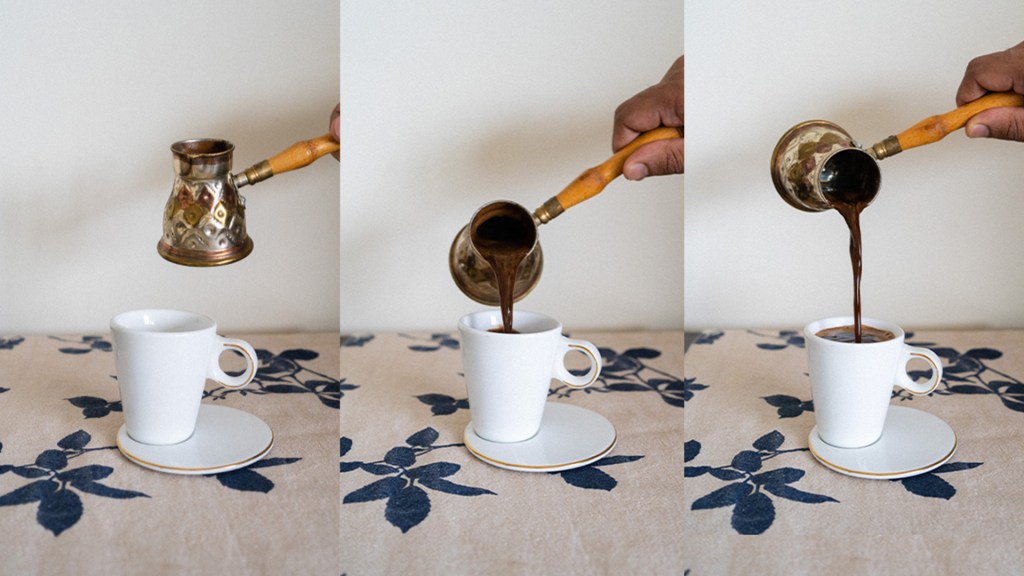
Satisfying pour from a Cezve; Photo – MemoriesByMegha Sadly, I didn’t brew with it for more than 4 years since I got it. Turkish coffee recipe needs a very fine ground of coffee, and I have been hesitating to order a pack of pre-grounded coffee as I was so used to grinding fresh. Then, by virtue of a fortunate mistake, I ordered a very fine pre-ground coffee from Araku, that suits their design of moka pot. While initially my heart sank as I opened the pack, a eureka moment took over that it’s apt for the Cezve. Since then, I started brewing and enjoying it.
Why do I love Cezve?
Compared to the hoard of many other coffee brewers – Cezve is super fast, super simple, very intuitive, and hence a lot of fun. Cleaning is super quick too. It’s my go to early morning brew.
The Equipment
What is Cezve / Ibrik?
- The Equipment. Cezve (pronounced jez-veh) is a small long-handled pot with a pouring lip designed specifically to make Turkish coffee. It is traditionally made of brass or copper. It is also called Ibrik, Briki, a few other names. (Thanks Wikipedia).
- The Pitch. Probably the world’s oldest coffee-brewing method, and the most widely used one too.
- The Genesis. Brewing with Cezve seems to originate somewhere around 1600 AD in the middle-east Ottoman empire. There’s a huge history and cultural context for Turkish coffee which I am not covering here.
- Variants: It is traditionally made of Brass or Copper, also Silver and Gold editions for the richer folks. Nowadays, you can find stainless steel varieties as well.
- The Brew Method. Immersion Brewing.
- The Output. The coffee is served along with all the coffee fines (no filter), allowing them to settle before consumption. It’s a rich and satisfying cup, with a strength between an americano and an espresso.
Brewing Guides
What is my style? My favourite is to brew it based on the colour and motion of foam. The coffee needs to brew on low heat for ~1.5-2 minutes. Experts say 2-4 mins based on whom you ask. It needs to stop after coffee foams up and the foam starts folding on itself. The foam needs to hit a darker shade of brown as well. If timed well, both will happen together. Note that we shouldn’t be continuing to boil after it foamed for the first time, this is to prevent over extraction and bitter coffee. Brewing it too soon, especially if the heat is high, will leave the coffee under extracted. I studied a few recipes and the links to them later in the article. Here is my recommendation:
- The Roast. Medium roasts. You can use lighter or darker roasts too.
- The Ratio. I use 1:10, you can start from here and change as you prefer.
- The Dose. 8 grams of coffee, this is based on the brew ratio 1:10 and my Cezve’s capacity .
- The Grind. Very fine size, even smaller than espresso. I don’t have a fine grinder at this point, so I directly order pre-ground turkish (or very fine grind) coffee.
- The Water. 80 grams, at 60-80 degree celsius. Room temperature water makes the coffee clump together.
- The Process.
- Fill the cezve with 80 grams of hot water. Add 8 grams of coffee on it using a small spoon. I find it easier to do it in this sequence, the other way around should be alright as well.
- Mix the coffee well with the water by stirring the spoon.
- I use a gas stove, which I put on the lowest heat. As the water is already hot when I start, it gets to foam very soon. Brewing it too early will lead to under extracted coffee. So I hold the Cezve about 6 inches over the flame to reduce the heat further and extend the brew to about 1.5-2 mins.
- When it’s ready, the coffee starts foaming, and the foam starts to fold on itself, or outwards on the wall (based on the shape and size of the cezve). Colour of the foam turns darker.
- At this point, remove the coffee from heat and pour it in the cup to serve.
- The Coffee.
- Wait for a minute or two to let the coffee cool and for the coffee particles to settle to the bottom. The foam on top of the cup can contain some particles as well, which can be removed with a spoon like done for cupping. Alternately, you can just blow the foam away and start sipping from one side. It works just fine for me.
- Enjoy the rich smooth coffee.
- Be mindful. Stop before you sip on the mud. :).
Occasionally, the coffee is brewed with some sugar and served with a glass of water and sweet treats.
Here are some of the guides I tested and learned from:
- The Guru. Thomas Green’s Make Turkish Coffee Like A Boss guide is the best one to start with. He brews & explains like a master.
- The Re-Inventor. Viacheslav Druzhyin “The man who reinvented Turkish Coffee” has made this amazing video. Claims aside, I really loved this guidance on Taste Control based on Colour and Motion of the foam. This is the intuitive fun element that resonated with me. The video is very well edited and narrated, it’s a treat in itself.
For readers interested in the culture, here’s a link to a book about Turkish Coffee Culture published by the Ministry Of Culture And Tourism, Turkey.If you liked what I write you might want to follow my journey on Instagram @journal_of_a_coffee_enthusiast.
-
How chocolate is made
Cultivation: Grow cacao beans
Chocolate is made with cacao beans.
70% of the cacao grows in West Africa.
Fun fact: cacao is grown in India in Karnataka and Kerala.
It is grown in warm, moist and shady climates.
Harvesting, Processing and Shipping
The fruits are harvested when fully ripe.
The pods are opened to extract the beans.
After that, the beans are fermented for a unique aroma in a two step fermentation process.
Then the beans are dried in fresh air and sunlight. They are dried to < 7% moisture.
The impurities are removed and then the cacao beans are packed and shipped.
Manufacturing: Make chocolate
The beans are taken to a quality check by sensory experts.
Next, the cacao nibs are taken out from the shell by crushing the beans.
Roasting the cacao nibs enhances the flavor.
Grinding turns cacao nibs into a liquid-like texture called chocolate liquor.
After that, Refining and Conching mixes them along with sugar and milk, into a fine silky smooth liquid.
Then, during a process called tempering, chocolate is reheated and cooled again to give it a shiny surface, a strong snap, and a smoother texture in the mouth.
Finally, the chocolate is ready to be poured into moulds like bars to be consumed directly or to make them into more varieties of chocolates.
Image source: https://www.roquette.com/innovation-hub/food/how-it-is-made/chocolate
-
Almond-tella
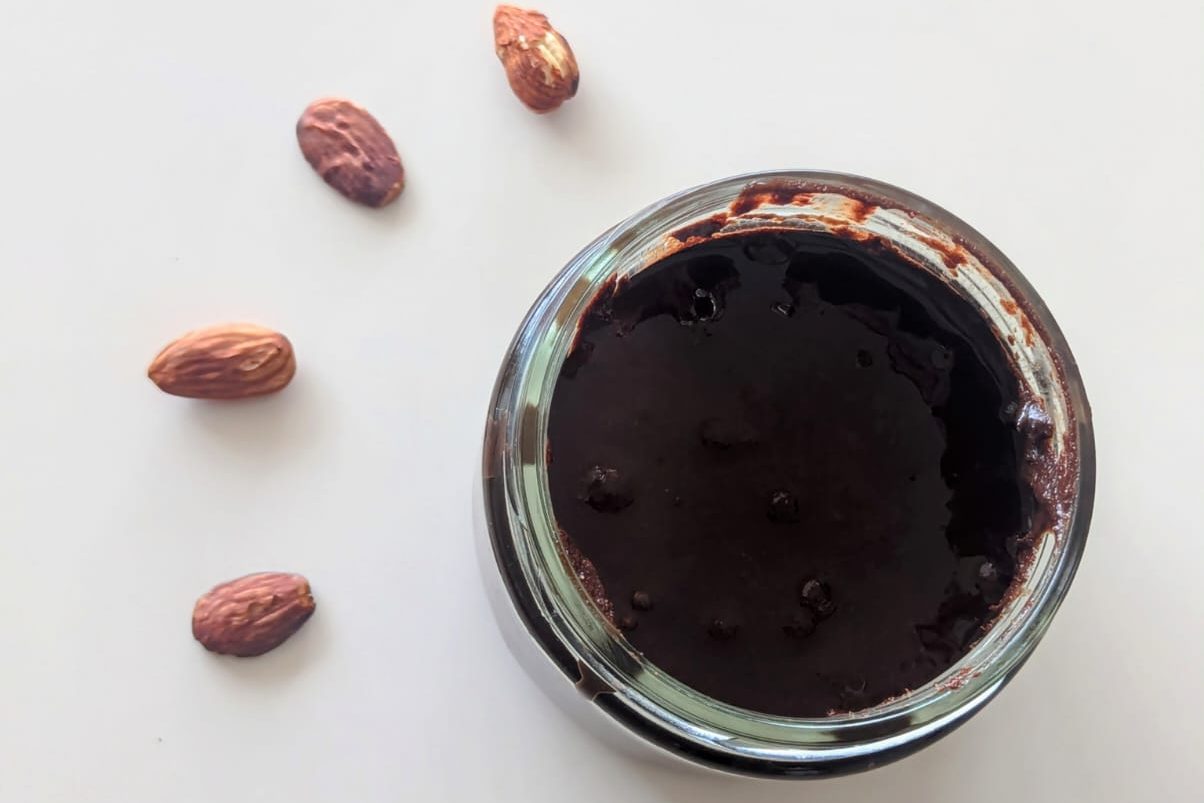
Healthy and yummy chocolatey spread, with goodness of almonds.
Ingredients
- Almond 150g
- Cocoa Powder (Unsweetened) 40g
- White Sugar (Powered) 60g
- Virgin Coconut Oil 1.5 tbsp
- Salt 1/8 tsp
Method
- First, toast the almonds evenly on a pan on low heat till they become fragrant and crunchy. Stir occationally.
- Next, cool the almonds to room temperature.
- Then, blend toasted almond in a mixer till oil comes out.
- After that, add all the other ingredients and blend to make a uniform paste.
- Finally, ta da! It is ready. Enjoy!
Fun Nutri Fact: This recipe has half the amount of the sugar as compared to Nutella. Almond-tella has about 22% sugar, whereas Nutella has 49.8% sugar. Almond-tella is healthier!
Notes:
- Toasted Almond: You can toast almonds at home on a pan or oven. Toasting makes almonds tastier and aromatic.
- It’s better if you use powdered sugar, or powder it before adding to the mixer.
- Add more coconut oil to make the consistency as per your choice.
- Instead of coconut oil, you can use melted butter as well.
-
Unofficial Roadmap for a Coffee Enthusiast
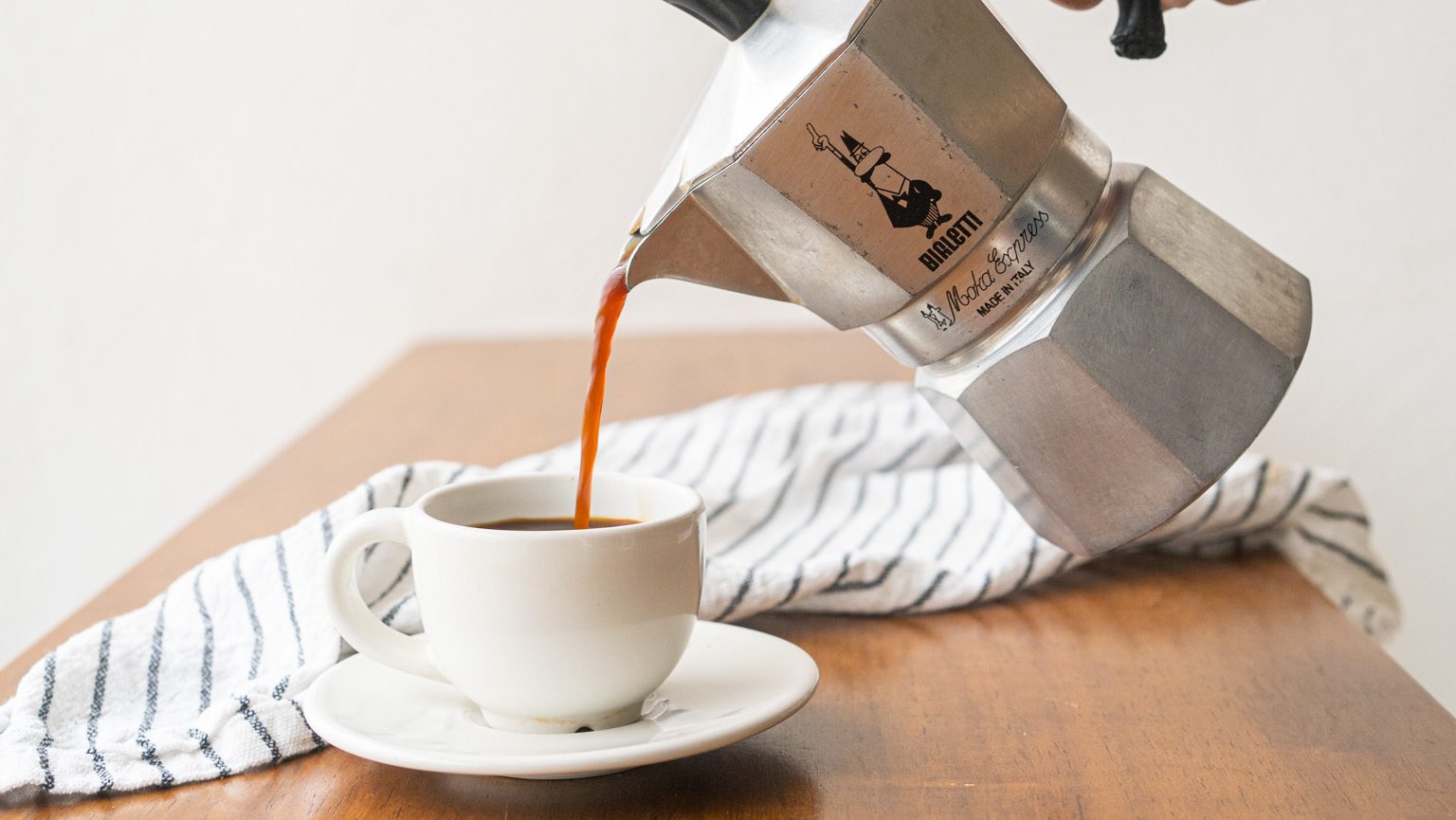
Coffee brewing from Rookie to Geek, n00b to Ninja, and decisions for gearing up (or not).
“You take the blue pill… the story ends, you go back to the cafe and order your favorite coffee.
You take the red pill (read on)… you stay in Wonderland, and I show you how deep the rabbit hole goes.”
While researching about the world of specialty coffee, I learnt from anything and everything I got my hands on – books, blogs, vlogs and workshops. Rummaging through all this content, I was very intrigued as well as overwhelmed by the details. It was deeply fascinating for me to discover so many aspects to take care of during stages of coffee from production to processing to roasting to brewing to consumption to get the best cup, with its complexity of flavor, taste and aroma.
A coffee a day; Photo – MemoriesByMegha In fact, just the process of brewing coffee itself involves multitude of parameters (weight, time, temperature as so on) and available gadgets to control them. The learning path into each parameter feels like tumbling down a rabbit hole. As I kept learning, I always felt my knowledge, skill, equipment and budget were inadequate. However, that is the beauty of adventure and exploration. At times I thought, it would have been nice if there were a map for beginners on how to advance towards the expertise. And then I thought, why not attempt to build one.
So I tried taking one parameter at a time and charting out what are the different degrees of progression into that. I will start with a focus on the process of brewing at home. Please note that what I am putting forward is more directional and not really a strict route by any means, else where’s the fun in that.
The objective of this roadmap is for a coffee enthusiast like me
- to create a cup of coffee that they like by
- improving the quality of brewing based on absolute facts [axiom]
- getting incremental control over each parameter to tweak that to personal liking [preferences]
- to keep exploring new experiences in the world of coffee
________
I will keep linking all the articles I write on this topic in the section below.
Brewing
- Measurement & Consistency in Brewing: Why bother?
- Measure: The Weighing & Ratio
- Measure: The Time and Extraction
________
ps: I write articles about my beginner to inetermiedate level specialty coffee journey. If you liked what I write you might want to read more from my coffee blog and follow my journey on Instagram @journal_of_a_coffee_enthusiast.
- to create a cup of coffee that they like by
-
Measurement & Consistency in Brewing: Why bother?
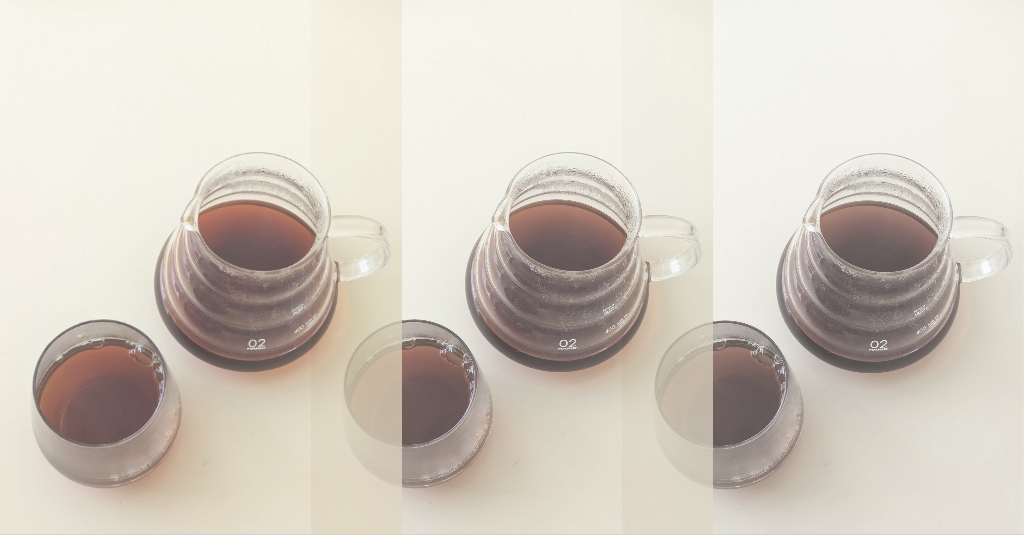
Often I see a great emphasis on consistency of coffee brewing, which left me wondering how important is it. This article summarizes my thoughts and opinion about it.
Consistency: What is?
Coffee extraction varies based on many parameters right from type of coffee used to grind size, temperature of water, amount of water to coffee, equipment, time of brewing, agitation, etc. Any change in these parameters will change the extraction and ultimately flavor and taste of the coffee. To replicate or tweak the brew, one needs to be able to measure the parameters in the first place. Measurement is the key that one needs to be meticulous about, to achieve the ‘consistent result‘. The combination of measured parameters is often called the brew recipe.
On the other hand, if the coffee was not so great, one can try to improve the brew by leveraging the knowledge of how the parameters work, and keep trying to change one parameter at a time. Just like any experiments with control and treatment.
Note, there are various degrees of measurements and hence degrees of consistency based on how many parameters someone wants to keep a check upon and how precisely. Basics starts with coffee to water weight ratio and time, to water temperature, to complex ones like pouring rate and agitation. Raising the bar on precision can be done with high precision weighing scales, or with kettles that maintain water temperature or skills to pour water at a consistent height & pour rate.
Consistent: To be or not to be?
I haven’t heard of anyone who takes coffee seriously and doesn’t not measure anything at all while brewing. There is at least some degree of consistenty executed by rough guidelines for parameters like coffee to water ratio, water temprateure and brew time. It is so easy to make a cup of bad coffee – especially underextracted sour or overextracted bitter. Some measurement and consistency is essential to avoid bad coffee and wasting good coffee beans.
Consistency is extremely important in a cafe setup, where the barista needs to meet the customers expectation from a brew. Cafe customers expect the same experience every time the order the particular brew – no surprises, thanks.
However, a home brewer based on personal preferences can keep it tight on consistent measurements or let the guard down in a few places. One extreme are the home brewers who like to do it as a habit. For every coffee, they start off with their go to brew recipes, measured meticulously & modified in search for their favorite version of brew. When a particular one blows the mind, then consistency becomes the key to repeat the magic.
At the other side, there are home brewers who want a relaxed brewing style with a hunch, without being so meticulous about the measurements and be ok with variable favors with the same coffee including some mess-up once in a while.
I am sure there is a spectrum between these two streotypes where most people lie, and they switch from one to another path based on mood and situation.
Side note, measurement is highly recommended for brewing with espresso machines, as things can go wrong very easily with that one.
Consistency: What is my take?
In my opinion, for home brewers pursuit of consistency is definitely an effective tool to improve a brew; but but the degree to be followed is a preference.
Initially, I benefitted much by brewing with fixed recipes, avoiding bad brews. Even now, I go with full measurements in cases of new brewing equipments, and try to be consistent in the initial period while building the hunch for it. I guess nothing different from how we develop a hunch for other activities like cooking or switching (manual) gears while driving.
Now, as I brew mostly with Aeropress, Hario v60 or moka pot, I have built a few approximations that work well, while keeping a check on some measurements like weight & grind size. I also incorporate a few extraction fundamentals as well, like varying temperature (approximately) based on roast profile. In case I find the coffee brew unpleasant, I try to fix the brew by tweaking a few parameters roughly or go for full measurements, based on how bad the coffee was.
Most of the time, you will find me going with the flow, with minimal measurements about weight and grind size, enjoying the relaxed brewing process and looking out for the adventure of variations, a new coffee flavor to be tasted.
__________
This is a part of the overall article – Unofficial Roadmap for a Coffee Enthusiast
I write articles about my beginner to inetermiedate level specialty coffee journey. If you liked what I write you might want to read more from my coffee blog and follow my journey on Instagram @journal_of_a_coffee_enthusiast.
Skip to content
Journal of a Coffee Enthusiast
Join with me in my journey to a world of amazing coffee

 Journal of a Coffee Enthusiast