My takes & learnings from my ongoing journey in coffee tasting.
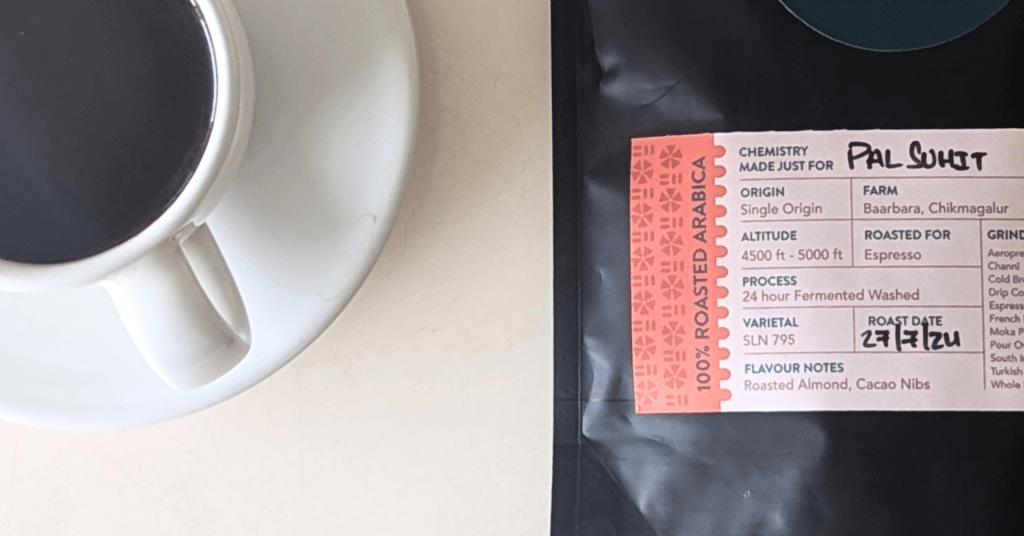
In my initial years of buying and brewing specialty coffee, I used to look at the bag’s flavour notes while sipping on the coffee and think “Where is the almond, the date, the sweet lime? All I can taste is coffee.” I kept wondering why I was unable to taste these notes. After many years I now understand the major reasons.
… because coffee is more like coffee than anything else.
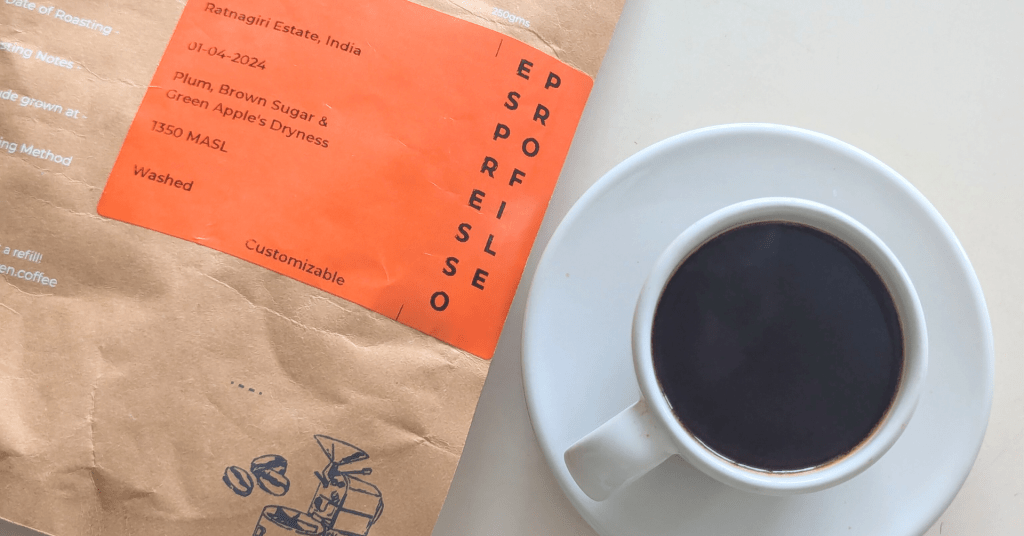
The main reason is because the coffee tastes more like coffee and not the other flavour notes like nuts, fruits, etc. The quantity of a certain set of flavour molecules that represent these nuts or fruits are in much lower concentration in coffee than in the nut or the fruit itself. Coffee can evoke a flavour due to the presence of similar molecules present, but in a very subtle way. It’s amazing how we humans can detect it. But this needs mindfulness and effort.
… because the same bag of coffee can create different brews
Though using the same bag of roasted coffee; two people can have different brew outputs. That’s primarily due to variation in brewing.
- Parameters that vary. This can be due to different grind size, brewing equipment & technique, timings, different water composition and water temperature. All these parameters influence extraction and hence the flavours of coffee.
- Under vs. Over extraction. Finer grind size, Higher water temperature, Higher brew time leads to more extraction. Over-extraction will lead to a more bitter taste; under-extraction leads to a weird sour taste (which is confused as a bitter taste often). Coffee is all about balancing the extraction.
- Variations in Equipment, Accessories, Recipes. Further, many parameters need to be balanced based on equipment being used – e.g Immersion based French Press, vs. Percolation based Pour Overs Aeropress vs. Pressure based Espresso and everything in the middle. Brewing equipment have many variations (e.g. Pour Over maybe has 100+ models). Some key accessories make a significant difference. E.g. Filters can be metal, cloth or paper, these lead to change in oil content and hence mouthfeel and flavours. Further the recipes on each brew equipment can be different e.g. Aeropress probably has zillions of recipes,
- Water is not the same. Water composition (types of salts or lack of them) influences the extraction of different flavour types and hence the final outcome. It’s important to have soft water, but not completely devoid of minerals. There are minerals like Calcium and Magnesium that help in better extraction and are desirable, whereas chlorides are not desirable. Then there are desirable alkalinity, pH, Sodium level and Hardness.. [reference: a detailed article by astrophysics researcher and coffee nerd Jonathan Gagné here]
- Multiply! All the variations can influence the taste of a cup of coffee. Let’s see how many variations are possible. Try multiplying [number of brew equipment] X [number of equipment variation] ̣ X [number of filter/accessory type] X [number of recipes] X [water composition variables]. Mathematically no two brews will ever be the same.
- Balance and Preference. My learning has been that among all these differences, we need to find out what is in general good (e.g. balance in extraction) and what we prefer (what type of brewer or what type of filter).
… because even same brew can lead to different flavor perceptions
What is fascinating is that even after having the same brew output, two people can perceive different flavours. “Flavor” is a complex combination of senses and processes, including touch, smell, taste, and vision. It’s a multisensory experience.
- temperature of the coffee. Based on when you drink the coffee after brewing coffee can taste different, this is because some flavour molecules are more volatile and are lost early after serving. The taste keeps varying as the coffee cools down.
- type of sips or slurps or gulps. The way we drink coffee can influence the way we sense it through our mouth and nose – whether we slurp loud to spray the coffee over our whole mouth, whether we swirl the coffee inside our mouth around our tongue, do we exhale via our nose right after. These various ways of drinking can change how we are exposing the coffee to our sensory receptors.
- our own sensory references. Based on our food habits and culture; we can recall flavor notes in coffee if anything feels similar. For example, if I never had a cranberry or blueberry, I wouldn’t be able to taste them in the coffee. I might think about another fruit that is probably close to it.
- color, shape, texture and weight of the cup. There are fascinating studies done by neuroscientist Fabiana Carvalho on how various other factors impact our sensory perception. She has conducted various studies to identify how – a pink cup can make coffee seem sweeter, a tulip shaped cup can lead to a perception of enhanced aroma, Here are some articles that talk more details in these topics. Read here and here.
I think the best way to enjoy coffee is to not get stressed about the flavour notes. Coffee could taste different to different people. We can use the flavour notes, as directional indicators towards the flavour profile. We can choose to buy coffee, if we think we would like those notes in the coffee.
However, if you really want to sense the flavour notes, then here’s an article to help you.
Here are some of the resources I learned from:
- Jessica Easto‘s Book How to Taste Coffee. A well-researched and carefully written book that doesn’t leave anyone behind in this journey. I enjoyed the books depths without feeling lost in advanced jargons.
- Fabiana Carvalho’s Instagram blog @thecoffeesensorium
If you liked what I write you might want to follow my journey on Instagram @journal_of_a_coffee_enthusiast.
 Journal of a Coffee Enthusiast
Your insights about flavor perception and brewing variations were so helpful. It’s inspiring to see how mindful tasting can make such a difference. ☕️🌟
LikeLike
Thank you Floricci 🙂
LikeLiked by 1 person