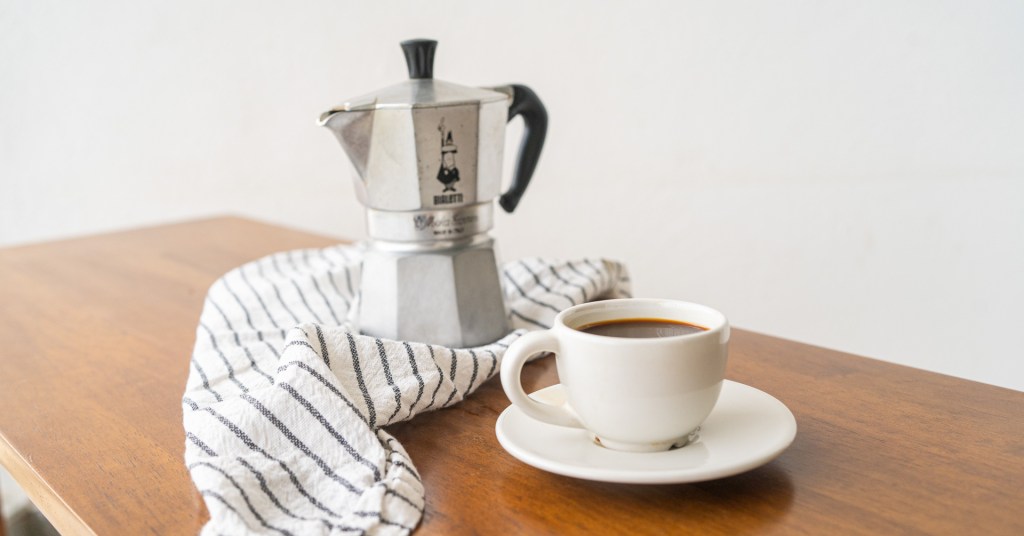
In 2016, my wife and I went on a trip across Europe, where I was stunned by the coffee in Italy. On the way back, we picked up a cute little brewer – Moka Express by Bialetti a.k.a. Moka Pot; and some coffee by Illy – a popular Italian coffee company dates back to the same year as the Moka Pot, 1933. Little did I know that we picked up something legendary. Moka pot is as Italian as it gets for a home brewer. Apparently 90% of Italian homes had a Bialetti moka pot in 2010. We barely knew how to use it, yet we brewed with it a lot!
Why do I love Moka Pot?
It’s complicated. 7 years into the relationship, you usually don’t have one single reason. To begin with, it was love at first sight as well as the first love, the first coffee brewer we had. I adore its design – simple yet iconic. It’s brew process – complex (easy to mess up) but satisfying. Lastly, the power to brew an espresso like shot as a base to prepare cappuccino to affogato to just savouring neat.
The Equipment
What is the Moka Pot ?
- The Original. The closest to the original is the model Moka Express, by Bialetti.
- The Pitch. As per Bialetti, “Moka Express is the original coffee maker, a symbol of Made in Italy quality, which offers the experience of the true Italian ritual of preparing a delicious cup of coffee.”
- The Genesis. Alfonso Bialetti, aluminium product manufacturer, made the moka pot coffee maker inspired by a laundry equipment – “the lisciveuse” – a container with a central steel tube that is filled with clothes and placed over the fire. Once the water started boiling, it went up through the tube, distributing the soap evenly. The shape was inspired by his wife’s silhouette: the head, the broad shoulders, the narrow waist, the arm on the hip and a pleated skirt. It was named after city of Mokha in Yemen, then famous for a wildly popular coffee.
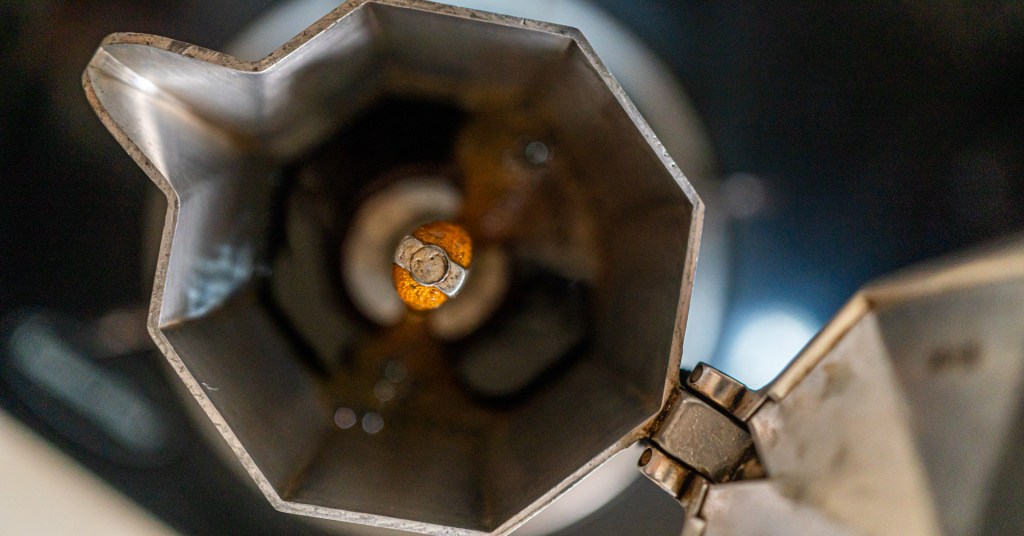
- The Equipment. The Moka Express, originally made with Aluminium, has 3 parts – a bottom chamber (boiler), a basket in the middle to hold the ground coffee, and a top chamber (coffee collector). It has a handle, a spout and a lid.
- Variants: Bialetti offers variants based on capacity (2 cups to 18 cups), material (aluminium, stainless steel), mechanism (induction, electric), design (brikka, venus). There are other brands with similar brewers.
- The Brew Method. Percolation Brewing. Water from the boiler rises through the coffee to the top chamber.
- The Output. By design the yield ratio (weight of coffee used to weight of extracted liquid) is 1:9-1:10, with a strength between an americano and an espresso. That’s how I started. However, now I prefer to brew a 1:3 ratio extract, closer to a standard 1:2 espresso ratio. While it is slightly weaker, it is close enough to make espresso based drinks like cappuccino, latte et al.
Brewing Guides
What is my style? My favourite is to brew close to espresso style coffee. So, I optimise the extraction for flavours and consistency accordingly. As compared to the traditional method, I stop at a lesser yield but slow down the extraction. For my 3 cup Moka Express model, I aim to get ~50 g coffee in 1.5-2 mins extraction. I studied many recipes, tested and tweaked to come up with what I liked best. Shared links to them later in the article. Here is my recommendation:
- The Roast. Espresso blends, medium-dark roasts. I enjoyed all types of roasts in a moka pot, but I love espresso blends the most.
- The Dose. 16-18 grams of coffee, to fill the basket without overpacking it.
- The Grind. Start with a grind size between espresso fine and pour over range (more towards the later), then see what works for you. I use 13 on Baratza Encore coffee grinder (15 clicks on Timemore Chestnut C2). Too fine causes the pot to splutter during extraction, resulting in bitter coffee. For espresso style, try the finest grind that doesn’t splutter.
- The Water. 100 degree celsius. Starting with boiling water reduces the brew time.
- The Puck. Fill coffee in the basket, tap the basket to pack and level evenly. Remove the extra coffee to keep the surface flat. Remember no tamping, just tapping. Overpacking impedes the smooth extraction.
- The Hack. If you have, fit an Aeropress filter below the metal filter of the top chamber. “What?!” Coincidentally the Aeropress filter exactly fits the underside of the metal filter of the 3 cup model of bialetti moka express. It keeps the cup of coffee clean, filtering out fine grounds that pass through the metal filter.
- The Process.
- Fill boiling water in the bottom chamber below the safety valve level.
- Slide in the prepped coffee basket. Ensure no coffee grounds on the screw threads of the moka pot, as it can cause improper sealing.
- Carefully screw the top chamber on the bottom chamber. Remember the bottom chamber is already very hot. Use a cloth to hold it. Ensure it is tightened well, else it can leak and impact the steam pressure.
- Put the moka pot on top of the gas stove, using a heating plate or support as needed, and keeping the safety valve in a direction away from you.
- Start with a low flame. Keep the lid open to monitor the extraction.
- The moment coffee starts oozing out, move the pot away from heat. The coffee should pour smoothly into the top chamber. Enjoy the soothing view.
- When the extraction almost stops, add a tiniest bit of heat to start further extraction. I do it by holding the moka pot 12-15 inches above the flame. This restarts the flow. Maintain a continuous super slow flow to control the extraction time. I aim for a 90-120s overall extraction time for the best flavours. Lesser time (faster flow) can result in a sour cup.
- The visual cue to my target yield is coffee level till the bottom corner of the pouring spout for my Moka Express. Close the lid and pour out immediately. The coffee keeps extracting due to residual heat, but at this stage it will dilute without adding desired flavour.
- I keep my cup on a weighing scale to measure the pour; usually 40-50 g of coffee. Since it keeps getting extracted in the moka pot, in case I’m falling short by 5-10 g, I pour again to hit the target.
- The Yield. ~50 grams as yield i.e. weight of extracted coffee; at 1:3 yield ratio.
- About espresso ratios, the standard espresso yield ratio is typically 1:1.15 to 1:2.5, which is the ratio of weight of ground coffee to weight of extracted liquid. Lungo (Italian for “long,”) with a yield of 1:2.5 to 1:4+; is a long-shot espresso. Here is a link to geek out on ratios.
- From a Moka Pot, I prefer the 1:3 Lungo shot for the perfect balance of flavours and consistency.
- The Coffee. I get roughly ~50 ml of coffee without any crema, a bit dilute as compared to an espresso, yet a decent and convenient replacement to enjoy the bold flavours.
Note that all the specific measurements in the recipe above are for brewing in a Bialetti Moka Express 3 Cup coffee maker. Many parameters are likely to be different for everyone. I would recommend tweaking as needed.
What can you do with a moka shot
- I usually drink straight. Enjoy!
- Just like espresso it can be used to make other Espresso Based drinks – Americano, Cappuccino, Latte, Cortado, Machiato. I prefer to use espresso blends for the milk based recipes.
- Oh yes, do make Affogatos. Get a scoop or two of the best vanilla ice-cream you can get your hands on (I like Baskin-Robbins), and pour a shot of moka on top of it. Here is what I did.
Here are some of the guides I tested and learned from:
- The Inventor. Standard method as suggested by Bialetti is very basic, I would recommend moving over from this very soon.
- The Expert. Coffee expert James Hoffman’s Ultimate method is great. It improves the result manyfold, and explains it very well. But I don’t consider it as ultimate.
- The Magician. Thomas Green’s Moka Pot Voodoo Recipe is the next level. He brews & explains moka pot like an espresso – prepping the puck to varying grind size and extraction time for the best shot of coffee.
If you liked what I write you might want to follow my journey on Instagram @journal_of_a_coffee_enthusiast.
 Journal of a Coffee Enthusiast